Showing posts with label CRISPR. Show all posts

Friday, September 21, 2018

More On CRISPR

Using new methodologies to optimize the CRISPR system.  Abstract:

CRISPR-Cas systems offer versatile technologies for genome engineering, yet their implementation has been outpaced by ongoing discoveries of new Cas nucleases and anti-CRISPR proteins. Here, we present the use of E. coli cell-free transcription-translation (TXTL) systems to vastly improve the speed and scalability of CRISPR characterization and validation. TXTL can express active CRISPR machinery from added plasmids and linear DNA, and TXTL can output quantitative dynamics of DNA cleavage and gene repression-all without protein purification or live cells. We used TXTL to measure the dynamics of DNA cleavage and gene repression for single- and multi-effector CRISPR nucleases, predict gene repression strength in E. coli, determine the specificities of 24 diverse anti-CRISPR proteins, and develop a fast and scalable screen for protospacer-adjacent motifs that was successfully applied to five uncharacterized Cpf1 nucleases. These examples underscore how TXTL can facilitate the characterization and application of CRISPR technologies across their many uses.

Wednesday, August 1, 2018

Multiplex Genome Editing

It is now becoming possible to perform multiple editing of genomes, a "DNA construction site" toolkit, which can enable a number of interesting applications, including, to quote the abstract: new therapeutic modalities and industrial applications, as well as 'genome writing' and de-extinction efforts.  Abstract:

Multiplex genome editing is the simultaneous introduction of multiple distinct modifications to a given genome. Though in its infancy, maturation of this field will facilitate powerful new biomedical research approaches, and will enable a host of far-reaching biological engineering applications, including new therapeutic modalities and industrial applications, as well as 'genome writing' and de-extinction efforts. In this perspective, we focus on multiplex editing of large eukaryotic genomes. We describe the current state of multiplexed genome editing, the current limits of our ability to multiplex edits, and provide perspective on the many applications that fully-realized multiplex editing technologies would enable in higher eukaryotic genomes. We offer a broad look at future directions, covering emergent CRISPR-based technologies, advances in intracellular delivery, and new DNA assembly approaches that may enable future genome editing on a massively multiplexed scale.

Saturday, June 30, 2018

CRISPR Editing In Blood Stem Cells

CRISPR editing in blood stem cells; abstract:

Genome editing via homologous recombination (HR) (gene targeting) in human hematopoietic stem cells (HSCs) has the power to reveal gene-function relationships and potentially transform curative hematological gene and cell therapies. However, there are no comprehensive and reproducible protocols for targeting HSCs for HR. Herein, we provide a detailed protocol for the production, enrichment, and in vitro and in vivo analyses of HR-targeted HSCs by combining CRISPR/Cas9 technology with the use of rAAV6 and flow cytometry. Using this protocol, researchers can introduce single-nucleotide changes into the genome or longer gene cassettes with the precision of genome editing. Along with our troubleshooting and optimization guidelines, researchers can use this protocol to streamline HSC genome editing at any locus of interest. The in vitro HSC-targeting protocol and analyses can be completed in 3 weeks, and the long-term in vivo HSC engraftment analyses in immunodeficient mice can be achieved in 16 weeks. This protocol enables manipulation of genes for investigation of gene functions during hematopoiesis, as well as for the correction of genetic mutations in HSC transplantation-based therapies for diseases such as sickle cell disease, β-thalassemia, and primary immunodeficiencies.

Monday, June 25, 2018

p53 Inhibits CRISPR-Cas9 Engineering In Human Pluripotent Stem Cells

Human pluripotent stem cells are difficult to engineer with the CRSPR system compared to other cell types, which is unfortunate given the great potential in being able to modify human stem cells.  The p53 gene protects against cancer and it seems that p53 function interferes with CRISPR modification of these human stem cell types by making the genetic alterations induced by CRISPR relatively toxic to the cells.  Human stem cells can acquire p53 mutations – which can lead to cancer – and it would seem that human stem cells that have been successfully engineered with CRISPR may be at higher risk for having p53 mutations since the presence of such mutations, inactivating toxicity to CRISPR, may have been the reason the cells were successfully engineered in the first place.  This is an important finding suggesting caution in using CRISPR in such cells and also suggests the need to find novel approaches that can increase CRISPR efficiency in these cells while still maintaining p53 and its anti-cancer functions.  Abstract:

CRISPR/Cas9 has revolutionized our ability to engineer genomes and conduct genome-wide screens in human cells1-3. Whereas some cell types are amenable to genome engineering, genomes of human pluripotent stem cells (hPSCs) have been difficult to engineer, with reduced efficiencies relative to tumour cell lines or mouse embryonic stem cells3-13. Here, using hPSC lines with stable integration of Cas9 or transient delivery of Cas9-ribonucleoproteins (RNPs), we achieved an average insertion or deletion (indel) efficiency greater than 80%. This high efficiency of indel generation revealed that double-strand breaks (DSBs) induced by Cas9 are toxic and kill most hPSCs. In previous studies, the toxicity of Cas9 in hPSCs was less apparent because of low transfection efficiency and subsequently low DSB induction 3 . The toxic response to DSBs was P53/TP53-dependent, such that the efficiency of precise genome engineering in hPSCs with a wild-type P53 gene was severely reduced. Our results indicate that Cas9 toxicity creates an obstacle to the high-throughput use of CRISPR/Cas9 for genome engineering and screening in hPSCs. Moreover, as hPSCs can acquire P53 mutations 14 , cell replacement therapies using CRISPR/Cas9-enginereed hPSCs should proceed with caution, and such engineered hPSCs should be monitored for P53 function.

Wednesday, May 23, 2018

Another CRISPR Modification

Customizing cell circuits for gene expression control.  Abstract:

The catalytically dead Cpf1 endonuclease from Acidaminococcus sp. BV3L6 (dAsCpf1) has been used to construct effective transcriptional repressors in bacteria and plants. However, it is still unclear if dAsCpf1 can function in human cells as a transcriptional regulator or a signal conductor. Here, we repurpose the dAsCpf1 system in human cells for a variety of functions, including the activation or repression of gene transcription. Moreover, we construct programmable ligand-controlled dAsCpf1 systems either by coupling crRNAs with engineered riboswitches or by fusing dAsCpf1 proteins with G protein-coupled receptors. These generalizable approaches allow us to regulate the transcription of endogenous genes in response to diverse classes of ligands, thus constructing artificial signaling pathways with rewired cellular input-output behaviors. The systems exhibit signal amplification, an important feature in cell signaling, when multiple crRNAs are processed from a single transcript. The results provide a robust and efficient platform for engineering customized cell signaling circuits.

Tuesday, May 1, 2018

Gene Therapy Delivery


Public Domain, https://commons.wikimedia.org/w/index.php?curid=488192


By Nandiyanto - Own work, Public Domain, https://commons.wikimedia.org/w/index.php?curid=5947359

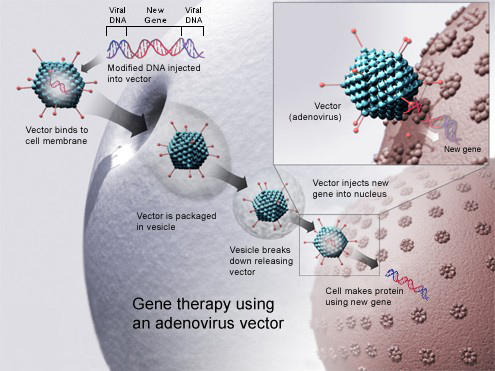
There is much excitement about the potential of gene therapy, particularly using the CRISPR method.  What many people do not understand is that a major bottleneck for gene therapy is not the therapy method itself but its delivery to the target cells.  What is needed is a delivery system that is efficient, specific (to the target if possible, unless the gene therapy itself is specific and then delivery can be more general), and safe (little or no side effects).  Viral delivery is efficient, but can have severe side effects, and has caused deathNanoparticles are an alternative with much potential, but require further development, including increasing efficiency.  The delivery problem needs to be solved before the potential of gene therapy can be fully realized.  Abstract:

Clustered regularly interspaced short palindromic repeat-CRISPR-associated protein (CRISPR-Cas) systems, found in nature as microbial adaptive immune systems, have been repurposed into an important tool in biological engineering and genome editing, providing a programmable platform for precision gene targeting. These tools have immense promise as therapeutics that could potentially correct disease-causing mutations. However, CRISPR-Cas gene editing components must be transported directly to the nucleus of targeted cells to exert a therapeutic effect. Thus, efficient methods of delivery will be critical to the success of therapeutic genome editing applications. Here, we review current strategies available for in vivo delivery of CRISPR-Cas gene editing components and outline challenges that need to be addressed before this powerful tool can be deployed in the clinic.

Wednesday, April 25, 2018

Salmonella And Colon Cancer

Public Domain, https://commons.wikimedia.org/w/index.php?curid=450281 

Salmonella, at least in mouse models, can promote colon cancer, at least in part by affecting Wnt signaling factors.  The microbial population in your body is one of the major determinants of healyh, in one form or another.  Abstract:

Salmonella infection is a major public health concern, and colonization in humans can be chronic and increases the risk of cancers. Wnt signaling is a key pathway for intestinal renewal and development, inflammation, and tumorigenesis. In the current study, we report a novel role of Wnt1 in infection and colon cancer using cell culture models, a Salmonella-colitis colon cancer model, and human samples. In contrast to the bacteria-induced increases in Wnt2 and Wnt11, Salmonella colonization significantly reduced the level of Wnt1 in intestinal epithelial cells in vivo and in vitro. The bacterial AvrA protein is known to activate the canonical Wnt pathway. Wnt1 expression level was downregulated by AvrA-expressing Salmonella but stabilized by AvrA-deficient Salmonella in the intestine of Salmonella-colitis mice. In a chronic Salmonella-infected cancer model, the Wnt1 protein level was decreased in the AvrA+ infected group. Thus, we further assessed the functional role of Wnt1 downregulation in the inflammatory response and colorectal cancer (CRC) progression. Moreover, downregulation of Wnt1 by the Crispr-Cas9 method promoted cancer cell invasion and migration. Interestingly, we found that Wnt1 was downregulated in human CRC tissue, and Wnt1 downregulation may be correlated with cancer progression. Our study provides insights into mechanisms by which enteric bacteria regulate Wnt1 expression and potentially contribute to infection-associated colon cancer.

Tuesday, April 17, 2018

"Big Papi" CRISPR Screening Approach

The "Big Papi" (paired aureus and pyogenes for interactions) approach to CRISPR screening will uncover new genetic-to-phenotype interactions that will be helpful for both basic science and for discovering new therapeutics for eventual clinical applications.  Abstract:

Combinatorial genetic screening using CRISPR-Cas9 is a useful approach to uncover redundant genes and to explore complex gene networks. However, current methods suffer from interference between the single-guide RNAs (sgRNAs) and from limited gene targeting activity. To increase the efficiency of combinatorial screening, we employ orthogonal Cas9 enzymes from Staphylococcus aureus and Streptococcus pyogenes. We used machine learning to establish S. aureus Cas9 sgRNA design rules and paired S. aureus Cas9 with S. pyogenes Cas9 to achieve dual targeting in a high fraction of cells. We also developed a lentiviral vector and cloning strategy to generate high-complexity pooled dual-knockout libraries to identify synthetic lethal and buffering gene pairs across multiple cell types, including MAPK pathway genes and apoptotic genes. Our orthologous approach also enabled a screen combining gene knockouts with transcriptional activation, which revealed genetic interactions with TP53. The "Big Papi" (paired aureus and pyogenes for interactions) approach described here will be widely applicable for the study of combinatorial phenotypes.

Sunday, February 4, 2018

Epigenetic CRISPR

Epigenetics is the modulation of gene expression through modification of chromatin (e.g., by methylation and/or acetylation) without changing DNA sequences.  The CRISPR system can be modified to activate genes through epigenetic remodeling; in mice, this has been shown helpful against diabetes, muscular dystrophy, and acute kidney disease.  Abstract:

Current genome-editing systems generally rely on inducing DNA double-strand breaks (DSBs). This may limit their utility in clinical therapies, as unwanted mutations caused by DSBs can have deleterious effects. CRISPR/Cas9 system has recently been repurposed to enable target gene activation, allowing regulation of endogenous gene expression without creating DSBs. However, in vivo implementation of this gain-of-function system has proven difficult. Here, we report a robust system for in vivo activation of endogenous target genes through trans-epigenetic remodeling. The system relies on recruitment of Cas9 and transcriptional activation complexes to target loci by modified single guide RNAs. As proof-of-concept, we used this technology to treat mouse models of diabetes, muscular dystrophy, and acute kidney disease. Results demonstrate that CRISPR/Cas9-mediated target gene activation can be achieved in vivo, leading to measurable phenotypes and amelioration of disease symptoms. This establishes new avenues for developing targeted epigenetic therapies against human diseases.

Also, it is possible to make the CRISPR system temperature-controlled.


Sunday, January 28, 2018

CRISPR Targeting RNA

The CRISPR system is a crucially important, relatively new, system for targeted modification of DNA, and one that has implications for gene therapy.  It has been discovered that certain CRISPR enzymes can modify RNA; this opens up new avenues for the control of gene expression and novel therapeutic applications.  Abstract:

Double-stranded DNA (dsDNA) binding and cleavage by Cas9 is a hallmark of type II CRISPR-Cas bacterial adaptive immunity. All known Cas9 enzymes are thought to recognize DNA exclusively as a natural substrate, providing protection against DNA phage and plasmids. Here we show that Cas9 enzymes from both subtypes II-A and II-C can recognize and cleave single-stranded RNA (ssRNA) by an RNA-guided mechanism that is independent of a protospacer-adjacent motif (PAM) sequence in the target RNA. RNA-guided RNA cleavage is programmable and site-specific, and we find that this activity can be exploited to reduce infection by single-stranded RNA phage in vivo. We also demonstrate that Cas9 can direct PAM-independent repression of gene expression in bacteria. These results indicate that a subset of Cas9 enzymes have the ability to act on both DNA and RNA target sequences, and suggest the potential for use in programmable RNA targeting applications.

Sunday, December 24, 2017

Gene Therapy For Deafness

Here we see a CRISPR-based system for gene therapy against a form of hereditary deafness, tested fairly successfully in the Beethoven mouse model, with “substantially reduced progressive hearing loss” and better survival of ear cells and a lower auditory response threshold. Gene therapy progress marches onward.  Abstract:

Although genetic factors contribute to almost half of all cases of deafness, treatment options for genetic deafness are limited. We developed a genome-editing approach to target a dominantly inherited form of genetic deafness. Here we show that cationic lipid-mediated in vivo delivery of Cas9-guide RNA complexes can ameliorate hearing loss in a mouse model of human genetic deafness. We designed and validated, both in vitro and in primary fibroblasts, genome editing agents that preferentially disrupt the dominant deafness-associated allele in the Tmc1 (transmembrane channel-like gene family 1) Beethoven (Bth) mouse model, even though the mutant Tmc1Bth allele differs from the wild-type allele at only a single base pair. Injection of Cas9-guide RNA-lipid complexes targeting the Tmc1Bth allele into the cochlea of neonatal Tmc1Bth/+ mice substantially reduced progressive hearing loss. We observed higher hair cell survival rates and lower auditory brainstem response thresholds in injected ears than in uninjected ears or ears injected with control complexes that targeted an unrelated gene. Enhanced acoustic startle responses were observed among injected compared to uninjected Tmc1Bth/+ mice. These findings suggest that protein-RNA complex delivery of target gene-disrupting agents in vivo is a potential strategy for the treatment of some types of autosomal-dominant hearing loss.

Wednesday, December 20, 2017

Looping DNA

The formation of DNA loops is an integral mechanism in the control of gene expression, bringing various control regions of DNA, and their associated transcriptional factors and chromatin remodeling complexes, in proximity – even across long distances – to affect modulation of expression of the relevant genes.  The ability to control such looping would be a new tool to target and modify specific gene expression for experimental and therapeutic benefit.  A modification of the CRISPR system shows promise to effect such novel control mechanisms.  Abstract:

DNA looping is a ubiquitous and critical feature of gene regulation. Although DNA looping can be efficiently detected, tools to readily manipulate DNA looping are limited. Here we develop CRISPR-based DNA looping reagents for creation of programmable DNA loops. Cleavage-defective Cas9 proteins of different specificity are linked by heterodimerization or translational fusion to create bivalent complexes able to link two separate DNA regions. After model-directed optimization, the reagents are validated using a quantitative DNA looping assay in E. coli. Looping efficiency is ~15% for a 4.7 kb loop, but is significantly improved by loop multiplexing with additional guides. Bivalent dCas9 complexes are also used to activate endogenous norVW genes by rewiring chromosomal DNA to bring distal enhancer elements to the gene promoters. Such reagents should allow manipulation of DNA looping in a variety of cell types, aiding understanding of endogenous loops and enabling creation of new regulatory connections.

Wednesday, November 29, 2017

Gene Therapy Advance

An important methodological advance that can be of use for gene therapy is described here.  This is a modification of the CRISPR system that now allows targeted base editing of DNA with high efficiency and low off-target effects.  In practical terms, this would allow targeted correction of DNA mutations, assuming an efficient and safe delivery system could be devised.  These are exciting days for the development of potential gene therapy approaches.  Abstract:

The spontaneous deamination of cytosine is a major source of C•G to T•A transitions, which account for half of known human pathogenic point mutations. The ability to efficiently convert target A•T base pairs to G•C could therefore advance the study and treatment of genetic diseases. While the deamination of adenine yields inosine, which is treated as guanine by polymerases, no enzymes are known to deaminate adenine in DNA. Here we report adenine base editors (ABEs) that mediate conversion of A•T to G•C in genomic DNA. We evolved a tRNA adenosine deaminase to operate on DNA when fused to a catalytically impaired CRISPR-Cas9. Extensive directed evolution and protein engineering resulted in seventh-generation ABEs (e.g., ABE7.10), that convert target A•T to G•C base pairs efficiently (~50% in human cells) with very high product purity (typically ≥ 99.9%) and very low rates of indels (typically ≤ 0.1%). ABEs introduce point mutations more efficiently and cleanly than a current Cas9 nuclease-based method, induce less off-target genome modification than Cas9, and can install disease-correcting or disease-suppressing mutations in human cells. Together with our previous base editors, ABEs advance genome editing by enabling the direct, programmable introduction of all four transition mutations without double-stranded DNA cleavage.

Friday, November 3, 2017

CRISPR For HIV Treatment?

This paper is an analysis of the future potential of the CRISP gene editing method as a therapeutic approach against HIV infection.  It needs to be noted that there is nothing on the horizon, and methodologies, including delivery of the system to the relevant infected cells, needs to be worked out.  Nevertheless, I provide the abstract here for interested individuals who wish to delve deeper into the topic:

The huge success of current antiretroviral therapy is mediated by a triple effect: (i) Halting progression to AIDS in infected persons; (ii) reducing the risk of transmission to contacts (treatment as prevention); and (iii) minimizing the risk of HIV acquisition treating uninfected persons at risk (pre-exposure prophylaxis). However, UNAIDS has estimated that only 70% of infected people globally are diagnosed, only 53% are treated, and overall 44% have undetectable viral load, which is the necessary request for ensuring any antiretroviral benefit. Thus, with 37 million people currently living with HIV worldwide and more than 2 million new infections per year, the prospects for global HIV eradication are far on the horizon. Over the past couple of years, rapid development has been seen for technologies enabling modification of gene expression, either by direct inhibition by RNA interference (RNAi) or by genomic modification at DNA level. In particular, genome-editing endonucleases have significantly improved our ability to make precise changes in the DNA of eukaryotic cells. Notably, firstgeneration genome-editing technologies (i.e., ZFNs and TALENs) have been replaced by clustered regularly interspaced short palindromic repeats (CRISPR/Cas9), which work with a short guide RNA (gRNA) to hybridize to a target DNA site and recruit the Cas9 endonuclease. Once integrated into the host genome, HIV gene expression is regulated by the LTR promoter. Hypothetically, gene editing of the HIV promoter might have the potential to deactivate viral transcription by the introduction of mutations or fragment excision. HIV gene therapy progressed very slowly until recent breakthroughs in gene-editing methods using CRISPR/Cas9 (Liao et al. Nat Commun 2015;6:6413). Using a shorter version of the Cas9 endonuclease ensembled into an adenoviral vector, critical segments of thAQ!e viral DNA genome spanning between the LTR and gag regions were successfully removed in HIV transgenic mice. Excision was confirmed in all examined tissues as well as in circulating lymphocytes and resulted in a drastic reduction of HIV-RNA (Kaminski et al. Gene Ther 2016;23:690-5). Moreover, using latently infected CD4+ T lymphocytes from HIV-infected persons, lentiviral-delivered CRISPR/Cas9 precisely removed the entire HIV genome spanning between the 50 and 30 LTRs of integrated HIV proviral DNA (Kaminski et al., Sci Rep 2016;6:22555), providing a proof of concept of the high potential of genome-editing technologies. Before moving to the clinic, the CRISPR/Cas9 technology must solve several major issues in the HIV scenario. First, generation of resistance is a major concern. Mutations may occur surrounding the targeted site and result in the selection of strains that are no longer recognized nor cleaved by CRISPR (Badia et al. Curr Opin Virol 2017;24:46-54). The efficacy of the anti-HIV CRISPR/Cas9 strategy is highly dependent on the gRNA sequence, yet some mutant viral strains show poor or no cleavage at all. Higher CRISPR/Cas9 pressure could delay but not eliminate viral replication when using a combination of distinct gRNAs targeting distinct HIV proviral genes. In this case, although the reading frame may remain unaltered, an accumulation of insertions and/or deletions may occur in the target sequence, rendering new viral strains insensitive to CRISPR/Cas9 cleavage. Finally, double-strand breaks resulting from CRISPR/Cas9 activity and subsequent cellular non-homologous end joining machinery may introduce mutations in sequences that are no longer recognized by the gRNA, and therefore not susceptible to Cas9 cleavage. A second consideration is a need for developing safe and effective mechanisms of delivery. Adenoviral vectors have long been studied in gene therapy and represent an ideal viral vector for transduction at different tissues. However, the packaging size of adenoviral vectors is a limiting factor, especially for CRIPSR/Cas9. Third, HIV has a genome of about 10 kb while a gRNA generally only targets 20 bp of the DNA molecule, which means that there are thousands available targeting sites for the provirus in latently infected cells. To date, there is no platform established solely for gRNA candidate evaluation in HIV provirus eradication. A final consideration is an access to all tissues and cells potentially harboring the HIV provirus, including reservoirs as the central nervous system. In this regard, efforts are being focused in the development of Cas9/gRNA nanoparticle formulations. To overcome these problems, a group in Florida recently developed human transgenic cells that may be used for gene-editing studies and as platform for high-throughput screen of HIV provirus disrupters (Huang et al. Sci Rep 2017;7:5955). Of note, Cas9 protein instead of a Cas9 plasmid was used. Compared to a plasmid introduction, Cas9 protein agents could be easily quantitatively applied and standardized, mimicking better real clinic scenarios. In summary, RNAi-based technologies have widely dominated gene therapy research during the past decade, with overall slow progress. However, the advent of new gene-editing technologies, and especially the CRISPR/Cas9 system, has revolutionized the field. In the HIV context, CRISPR/Cas9 applications might go further than those of RNAi, for example, enabling excision of segments of integrated proviral DNA from latently infected cells and allowing complete provirus elimination, or it may be used to reverse HIV latency. Although important challenges still need to be overcome, a promising pathway to HIV cure seems to have been found.