Showing posts with label gene therapy. Show all posts

Thursday, September 21, 2023

Gene Therapy For Sickle Cell Disease

Here is a paper from several years ago, abstract:

Sickle cell disease results from a homozygous missense mutation in the β-globin gene that causes polymerization of hemoglobin S. Gene therapy for patients with this disorder is complicated by the complex cellular abnormalities and challenges in achieving effective, persistent inhibition of polymerization of hemoglobin S. We describe our first patient treated with lentiviral vector-mediated addition of an antisickling β-globin gene into autologous hematopoietic stem cells. Adverse events were consistent with busulfan conditioning. Fifteen months after treatment, the level of therapeutic antisickling β-globin remained high (approximately 50% of β-like-globin chains) without recurrence of sickle crises and with correction of the biologic hallmarks of the disease. (Funded by Bluebird Bio and others; HGB-205 ClinicalTrials.gov number, NCT02151526 .).

So, fifteen months of continued therapeutic benefit was observed.  That's very good and stable for that time period. We'll need to look into, and follow up on, continuing developments in this field; but in general, gene therapy opens up exciting avenues of novel therapeutics to treat a variety of inherited and sporadic disorders.

Thursday, September 15, 2022

Genome Editing In The (Mouse) Brain

Here is a paper from several years ago discussing a fascinating and very promising finding.  We'll need to take a look at any subsequent developments in this field as they have occurred or will occur. Abstract:

We demonstrate editing of post-mitotic neurons in the adult mouse brain following injection of Cas9 ribonucleoprotein (RNP) complexes in the hippocampus, striatum and cortex. Engineered variants of Cas9 with multiple SV40 nuclear localization sequences enabled a tenfold increase in the efficiency of neuronal editing in vivo. These advances indicate the potential of genome editing in the brain to correct or inactivate the underlying genetic causes of neurological diseases.

The ability o directly alter gene sequences in the adult brain can yield a vast array of therapeutic options for certain genetic neurological diseases.  An additional thing that will become necessary for certain of those diseases is the ability to therapeutically intervene, on  brain-wide level, at the protein level as well (e.g., misfolded protein disorders).

Thursday, May 19, 2022

Gene Editing For Muscular Dystrophy

Here is a paper from several years ago discussing promising results with gene therapy in a mouse model of muscular dystrophy.  Abstract:

Gene replacement therapies utilizing adeno-associated viral (AAV) vectors hold great promise for treating Duchenne muscular dystrophy (DMD). A related approach uses AAV vectors to edit specific regions of the DMD gene using CRISPR/Cas9. Here we develop multiple approaches for editing the mutation in dystrophic mdx4cv mice using single and dual AAV vector delivery of a muscle-specific Cas9 cassette together with single-guide RNA cassettes and, in one approach, a dystrophin homology region to fully correct the mutation. Muscle-restricted Cas9 expression enables direct editing of the mutation, multi-exon deletion or complete gene correction via homologous recombination in myogenic cells. Treated muscles express dystrophin in up to 70% of the myogenic area and increased force generation following intramuscular delivery. Furthermore, systemic administration of the vectors results in widespread expression of dystrophin in both skeletal and cardiac muscles. Our results demonstrate that AAV-mediated muscle-specific gene editing has significant potential for therapy of neuromuscular disorders.

That's very promising.  What's going on more recently? Future posts here will explore the progress in this and other similar projects using gene therapy tested in mouse models. This is why basic science research is so important, as the methods utilized are ultimately derived from such research.

Thursday, October 21, 2021

Gene Therapy For Hearing Loss: Vector Development

One major problem for gene therapy is designing a safe and effector vector for delivering the gene therapy material to the target cells.tissues.  Here is a paper demonstrating high levels of gene delivery in mouse ear cells.  Abstract:

Efforts to develop gene therapies for hearing loss have been hampered by the lack of safe, efficient, and clinically relevant delivery modalities. Here we demonstrate the safety and efficiency of Anc80L65, a rationally designed synthetic vector, for transgene delivery to the mouse cochlea. Ex vivo transduction of mouse organotypic explants identified Anc80L65 from a set of other adeno-associated virus (AAV) vectors as a potent vector for the cochlear cell targets. Round window membrane injection resulted in highly efficient transduction of inner and outer hair cells in mice, a substantial improvement over conventional AAV vectors. Anc80L65 round window injection was well tolerated, as indicated by sensory cell function, hearing and vestibular function, and immunologic parameters. The ability of Anc80L65 to target outer hair cells at high rates, a requirement for restoration of complex auditory function, may enable future gene therapies for hearing and balance disorders.

Continued development of such technologies should eventually have great benefit for human health.

Friday, September 21, 2018

More On CRISPR

Using new methodologies to optimize the CRISPR system.  Abstract:

CRISPR-Cas systems offer versatile technologies for genome engineering, yet their implementation has been outpaced by ongoing discoveries of new Cas nucleases and anti-CRISPR proteins. Here, we present the use of E. coli cell-free transcription-translation (TXTL) systems to vastly improve the speed and scalability of CRISPR characterization and validation. TXTL can express active CRISPR machinery from added plasmids and linear DNA, and TXTL can output quantitative dynamics of DNA cleavage and gene repression-all without protein purification or live cells. We used TXTL to measure the dynamics of DNA cleavage and gene repression for single- and multi-effector CRISPR nucleases, predict gene repression strength in E. coli, determine the specificities of 24 diverse anti-CRISPR proteins, and develop a fast and scalable screen for protospacer-adjacent motifs that was successfully applied to five uncharacterized Cpf1 nucleases. These examples underscore how TXTL can facilitate the characterization and application of CRISPR technologies across their many uses.

Wednesday, August 1, 2018

Multiplex Genome Editing

It is now becoming possible to perform multiple editing of genomes, a "DNA construction site" toolkit, which can enable a number of interesting applications, including, to quote the abstract: new therapeutic modalities and industrial applications, as well as 'genome writing' and de-extinction efforts.  Abstract:

Multiplex genome editing is the simultaneous introduction of multiple distinct modifications to a given genome. Though in its infancy, maturation of this field will facilitate powerful new biomedical research approaches, and will enable a host of far-reaching biological engineering applications, including new therapeutic modalities and industrial applications, as well as 'genome writing' and de-extinction efforts. In this perspective, we focus on multiplex editing of large eukaryotic genomes. We describe the current state of multiplexed genome editing, the current limits of our ability to multiplex edits, and provide perspective on the many applications that fully-realized multiplex editing technologies would enable in higher eukaryotic genomes. We offer a broad look at future directions, covering emergent CRISPR-based technologies, advances in intracellular delivery, and new DNA assembly approaches that may enable future genome editing on a massively multiplexed scale.

Saturday, June 30, 2018

CRISPR Editing In Blood Stem Cells

CRISPR editing in blood stem cells; abstract:

Genome editing via homologous recombination (HR) (gene targeting) in human hematopoietic stem cells (HSCs) has the power to reveal gene-function relationships and potentially transform curative hematological gene and cell therapies. However, there are no comprehensive and reproducible protocols for targeting HSCs for HR. Herein, we provide a detailed protocol for the production, enrichment, and in vitro and in vivo analyses of HR-targeted HSCs by combining CRISPR/Cas9 technology with the use of rAAV6 and flow cytometry. Using this protocol, researchers can introduce single-nucleotide changes into the genome or longer gene cassettes with the precision of genome editing. Along with our troubleshooting and optimization guidelines, researchers can use this protocol to streamline HSC genome editing at any locus of interest. The in vitro HSC-targeting protocol and analyses can be completed in 3 weeks, and the long-term in vivo HSC engraftment analyses in immunodeficient mice can be achieved in 16 weeks. This protocol enables manipulation of genes for investigation of gene functions during hematopoiesis, as well as for the correction of genetic mutations in HSC transplantation-based therapies for diseases such as sickle cell disease, β-thalassemia, and primary immunodeficiencies.

Monday, June 25, 2018

p53 Inhibits CRISPR-Cas9 Engineering In Human Pluripotent Stem Cells

Human pluripotent stem cells are difficult to engineer with the CRSPR system compared to other cell types, which is unfortunate given the great potential in being able to modify human stem cells.  The p53 gene protects against cancer and it seems that p53 function interferes with CRISPR modification of these human stem cell types by making the genetic alterations induced by CRISPR relatively toxic to the cells.  Human stem cells can acquire p53 mutations – which can lead to cancer – and it would seem that human stem cells that have been successfully engineered with CRISPR may be at higher risk for having p53 mutations since the presence of such mutations, inactivating toxicity to CRISPR, may have been the reason the cells were successfully engineered in the first place.  This is an important finding suggesting caution in using CRISPR in such cells and also suggests the need to find novel approaches that can increase CRISPR efficiency in these cells while still maintaining p53 and its anti-cancer functions.  Abstract:

CRISPR/Cas9 has revolutionized our ability to engineer genomes and conduct genome-wide screens in human cells1-3. Whereas some cell types are amenable to genome engineering, genomes of human pluripotent stem cells (hPSCs) have been difficult to engineer, with reduced efficiencies relative to tumour cell lines or mouse embryonic stem cells3-13. Here, using hPSC lines with stable integration of Cas9 or transient delivery of Cas9-ribonucleoproteins (RNPs), we achieved an average insertion or deletion (indel) efficiency greater than 80%. This high efficiency of indel generation revealed that double-strand breaks (DSBs) induced by Cas9 are toxic and kill most hPSCs. In previous studies, the toxicity of Cas9 in hPSCs was less apparent because of low transfection efficiency and subsequently low DSB induction 3 . The toxic response to DSBs was P53/TP53-dependent, such that the efficiency of precise genome engineering in hPSCs with a wild-type P53 gene was severely reduced. Our results indicate that Cas9 toxicity creates an obstacle to the high-throughput use of CRISPR/Cas9 for genome engineering and screening in hPSCs. Moreover, as hPSCs can acquire P53 mutations 14 , cell replacement therapies using CRISPR/Cas9-enginereed hPSCs should proceed with caution, and such engineered hPSCs should be monitored for P53 function.

Wednesday, May 23, 2018

Another CRISPR Modification

Customizing cell circuits for gene expression control.  Abstract:

The catalytically dead Cpf1 endonuclease from Acidaminococcus sp. BV3L6 (dAsCpf1) has been used to construct effective transcriptional repressors in bacteria and plants. However, it is still unclear if dAsCpf1 can function in human cells as a transcriptional regulator or a signal conductor. Here, we repurpose the dAsCpf1 system in human cells for a variety of functions, including the activation or repression of gene transcription. Moreover, we construct programmable ligand-controlled dAsCpf1 systems either by coupling crRNAs with engineered riboswitches or by fusing dAsCpf1 proteins with G protein-coupled receptors. These generalizable approaches allow us to regulate the transcription of endogenous genes in response to diverse classes of ligands, thus constructing artificial signaling pathways with rewired cellular input-output behaviors. The systems exhibit signal amplification, an important feature in cell signaling, when multiple crRNAs are processed from a single transcript. The results provide a robust and efficient platform for engineering customized cell signaling circuits.

Monday, May 21, 2018

Gene Therapy For Beta-Thalassemia


BACKGROUND:
Donor availability and transplantation-related risks limit the broad use of allogeneic hematopoietic-cell transplantation in patients with transfusion-dependent β-thalassemia. After previously establishing that lentiviral transfer of a marked β-globin (βA-T87Q) gene could substitute for long-term red-cell transfusions in a patient with β-thalassemia, we wanted to evaluate the safety and efficacy of such gene therapy in patients with transfusion-dependent β-thalassemia.
METHODS:
In two phase 1-2 studies, we obtained mobilized autologous CD34+ cells from 22 patients (12 to 35 years of age) with transfusion-dependent β-thalassemia and transduced the cells ex vivo with LentiGlobin BB305 vector, which encodes adult hemoglobin (HbA) with a T87Q amino acid substitution (HbAT87Q). The cells were then reinfused after the patients had undergone myeloablative busulfan conditioning. We subsequently monitored adverse events, vector integration, and levels of replication-competent lentivirus. Efficacy assessments included levels of total hemoglobin and HbAT87Q, transfusion requirements, and average vector copy number.
RESULTS:
At a median of 26 months (range, 15 to 42) after infusion of the gene-modified cells, all but 1 of the 13 patients who had a non-β0/β0 genotype had stopped receiving red-cell transfusions; the levels of HbAT87Q ranged from 3.4 to 10.0 g per deciliter, and the levels of total hemoglobin ranged from 8.2 to 13.7 g per deciliter. Correction of biologic markers of dyserythropoiesis was achieved in evaluated patients with hemoglobin levels near normal ranges. In 9 patients with a β0/β0 genotype or two copies of the IVS1-110 mutation, the median annualized transfusion volume was decreased by 73%, and red-cell transfusions were discontinued in 3 patients. Treatment-related adverse events were typical of those associated with autologous stem-cell transplantation. No clonal dominance related to vector integration was observed.
CONCLUSIONS:
Gene therapy with autologous CD34+ cells transduced with the BB305 vector reduced or eliminated the need for long-term red-cell transfusions in 22 patients with severe β-thalassemia without serious adverse events related to the drug product. (Funded by Bluebird Bio and others; HGB-204 and HGB-205 ClinicalTrials.gov numbers, NCT01745120 and NCT02151526 .).

Tuesday, May 1, 2018

Gene Therapy Delivery


Public Domain, https://commons.wikimedia.org/w/index.php?curid=488192


By Nandiyanto - Own work, Public Domain, https://commons.wikimedia.org/w/index.php?curid=5947359

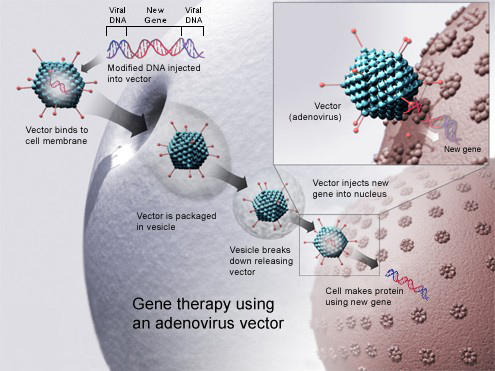
There is much excitement about the potential of gene therapy, particularly using the CRISPR method.  What many people do not understand is that a major bottleneck for gene therapy is not the therapy method itself but its delivery to the target cells.  What is needed is a delivery system that is efficient, specific (to the target if possible, unless the gene therapy itself is specific and then delivery can be more general), and safe (little or no side effects).  Viral delivery is efficient, but can have severe side effects, and has caused deathNanoparticles are an alternative with much potential, but require further development, including increasing efficiency.  The delivery problem needs to be solved before the potential of gene therapy can be fully realized.  Abstract:

Clustered regularly interspaced short palindromic repeat-CRISPR-associated protein (CRISPR-Cas) systems, found in nature as microbial adaptive immune systems, have been repurposed into an important tool in biological engineering and genome editing, providing a programmable platform for precision gene targeting. These tools have immense promise as therapeutics that could potentially correct disease-causing mutations. However, CRISPR-Cas gene editing components must be transported directly to the nucleus of targeted cells to exert a therapeutic effect. Thus, efficient methods of delivery will be critical to the success of therapeutic genome editing applications. Here, we review current strategies available for in vivo delivery of CRISPR-Cas gene editing components and outline challenges that need to be addressed before this powerful tool can be deployed in the clinic.

Tuesday, April 17, 2018

DNA Nanorobots Against Cancer


From article:


DNA nanorobots are a somewhat new concept for drug delivery. They work by getting programmed DNA to fold into itself like origami and then deploying it like a tiny machine, ready for action.
DNA nanorobots, Nature Biotechnology 2018
The scientists behind this study tested the delivery bots by injecting them into mice with human breast cancer tumors. Within 48 hours, the bots had successfully grabbed onto vascular cells at the tumor sites, causing blood clots in the tumor's vessels and cutting off their blood supply, leading to their death.
Remarkably, the bots did not cause clotting in other parts of the body, just the cancerous cells they'd been programmed to target, according to the paper.
The scientists were also able to demonstrate the bots did not cause clotting in the healthy tissues of Bama miniature pigs, calming fears over what might happen in larger animals.

Sunday, March 11, 2018

Hemophilia Gene Therapy Success


BACKGROUND:
The prevention of bleeding with adequately sustained levels of clotting factor, after a single therapeutic intervention and without the need for further medical intervention, represents an important goal in the treatment of hemophilia.
METHODS:
We infused a single-stranded adeno-associated viral (AAV) vector consisting of a bioengineered capsid, liver-specific promoter and factor IX Padua (factor IX-R338L) transgene at a dose of 5×10¹¹ vector genomes per kilogram of body weight in 10 men with hemophilia B who had factor IX coagulant activity of 2% or less of the normal value. Laboratory values, bleeding frequency, and consumption of factor IX concentrate were prospectively evaluated after vector infusion and were compared with baseline values.
RESULTS:
No serious adverse events occurred during or after vector infusion. Vector-derived factor IX coagulant activity was sustained in all the participants, with a mean (±SD) steady-state factor IX coagulant activity of 33.7±18.5% (range, 14 to 81). On cumulative follow-up of 492 weeks among all the participants (range of follow-up in individual participants, 28 to 78 weeks), the annualized bleeding rate was significantly reduced (mean rate, 11.1 events per year [range, 0 to 48] before vector administration vs. 0.4 events per year [range, 0 to 4] after administration; P=0.02), as was factor use (mean dose, 2908 IU per kilogram [range, 0 to 8090] before vector administration vs. 49.3 IU per kilogram [range, 0 to 376] after administration; P=0.004). A total of 8 of 10 participants did not use factor, and 9 of 10 did not have bleeds after vector administration. An asymptomatic increase in liver-enzyme levels developed in 2 participants and resolved with short-term prednisone treatment. One participant, who had substantial, advanced arthropathy at baseline, administered factor for bleeding but overall used 91% less factor than before vector infusion.
CONCLUSIONS:
We found sustained therapeutic expression of factor IX coagulant activity after gene transfer in 10 participants with hemophilia who received the same vector dose. Transgene-derived factor IX coagulant activity enabled the termination of baseline prophylaxis and the near elimination of bleeding and factor use. (Funded by Spark Therapeutics and Pfizer; ClinicalTrials.gov number, NCT02484092 .).

Sunday, February 4, 2018

Epigenetic CRISPR

Epigenetics is the modulation of gene expression through modification of chromatin (e.g., by methylation and/or acetylation) without changing DNA sequences.  The CRISPR system can be modified to activate genes through epigenetic remodeling; in mice, this has been shown helpful against diabetes, muscular dystrophy, and acute kidney disease.  Abstract:

Current genome-editing systems generally rely on inducing DNA double-strand breaks (DSBs). This may limit their utility in clinical therapies, as unwanted mutations caused by DSBs can have deleterious effects. CRISPR/Cas9 system has recently been repurposed to enable target gene activation, allowing regulation of endogenous gene expression without creating DSBs. However, in vivo implementation of this gain-of-function system has proven difficult. Here, we report a robust system for in vivo activation of endogenous target genes through trans-epigenetic remodeling. The system relies on recruitment of Cas9 and transcriptional activation complexes to target loci by modified single guide RNAs. As proof-of-concept, we used this technology to treat mouse models of diabetes, muscular dystrophy, and acute kidney disease. Results demonstrate that CRISPR/Cas9-mediated target gene activation can be achieved in vivo, leading to measurable phenotypes and amelioration of disease symptoms. This establishes new avenues for developing targeted epigenetic therapies against human diseases.

Also, it is possible to make the CRISPR system temperature-controlled.


Wednesday, January 31, 2018

THOR And Cancer

THOR may promote cancer, not Thor the Asgardian god, but THOR the long non-coding RNA. Targeting THOR via gene therapy may be a novel anti-cancer approach.  Abstract:

Large-scale transcriptome sequencing efforts have vastly expanded the catalog of long non-coding RNAs (lncRNAs) with varying evolutionary conservation, lineage expression, and cancer specificity. Here, we functionally characterize a novel ultraconserved lncRNA, THOR (ENSG00000226856), which exhibits expression exclusively in testis and a broad range of human cancers. THOR knockdown and overexpression in multiple cell lines and animal models alters cell or tumor growth supporting an oncogenic role. We discovered a conserved interaction of THOR with IGF2BP1 and show that THOR contributes to the mRNA stabilization activities of IGF2BP1. Notably, transgenic THOR knockout produced fertilization defects in zebrafish and also conferred a resistance to melanoma onset. Likewise, ectopic expression of human THOR in zebrafish accelerated the onset of melanoma. THOR represents a novel class of functionally important cancer/testis lncRNAs whose structure and function have undergone positive evolutionary selection.

Sunday, January 28, 2018

CRISPR Targeting RNA

The CRISPR system is a crucially important, relatively new, system for targeted modification of DNA, and one that has implications for gene therapy.  It has been discovered that certain CRISPR enzymes can modify RNA; this opens up new avenues for the control of gene expression and novel therapeutic applications.  Abstract:

Double-stranded DNA (dsDNA) binding and cleavage by Cas9 is a hallmark of type II CRISPR-Cas bacterial adaptive immunity. All known Cas9 enzymes are thought to recognize DNA exclusively as a natural substrate, providing protection against DNA phage and plasmids. Here we show that Cas9 enzymes from both subtypes II-A and II-C can recognize and cleave single-stranded RNA (ssRNA) by an RNA-guided mechanism that is independent of a protospacer-adjacent motif (PAM) sequence in the target RNA. RNA-guided RNA cleavage is programmable and site-specific, and we find that this activity can be exploited to reduce infection by single-stranded RNA phage in vivo. We also demonstrate that Cas9 can direct PAM-independent repression of gene expression in bacteria. These results indicate that a subset of Cas9 enzymes have the ability to act on both DNA and RNA target sequences, and suggest the potential for use in programmable RNA targeting applications.

Tuesday, January 16, 2018

Essential Genes And Cancer Immunotherapy

Here is a paper looking at what genes may be essential for successful cancer immunotherapy. Abstract:

Somatic gene mutations can alter the vulnerability of cancer cells to T-cell-based immunotherapies. Here we perturbed genes in human melanoma cells to mimic loss-of-function mutations involved in resistance to these therapies, by using a genome-scale CRISPR-Cas9 library that consisted of around 123,000 single-guide RNAs, and profiled genes whose loss in tumour cells impaired the effector function of CD8+ T cells. The genes that were most enriched in the screen have key roles in antigen presentation and interferon-γ signalling, and correlate with cytolytic activity in patient tumours from The Cancer Genome Atlas. Among the genes validated using different cancer cell lines and antigens, we identified multiple loss-of-function mutations in APLNR, encoding the apelin receptor, in patient tumours that were refractory to immunotherapy. We show that APLNR interacts with JAK1, modulating interferon-γ responses in tumours, and that its functional loss reduces the efficacy of adoptive cell transfer and checkpoint blockade immunotherapies in mouse models. Our results link the loss of essential genes for the effector function of CD8+ T cells with the resistance or non-responsiveness of cancer to immunotherapies.

Restoring loss of function (gene therapy) may allow for successful cancer immunotherapy in those patients resistant to that therapeutic approach.  This study is the first necessary step in that direction and is therefore highly encouraging.

Tuesday, December 26, 2017

High-Fidelity CRISPR

A more accurate “high-fidelity” CRISPR system will enable more precise editing of genomes and opens up the hope for optimized gene therapy approaches for human disease, particularly genetic diseases.  Abstract:

The RNA-guided CRISPR-Cas9 nuclease from Streptococcus pyogenes (SpCas9) has been widely repurposed for genome editing1-4. High-fidelity (SpCas9-HF1) and enhanced specificity (eSpCas9(1.1)) variants exhibit substantially reduced off-target cleavage in human cells, but the mechanism of target discrimination and the potential to further improve fidelity are unknown5-9. Using single-molecule Förster resonance energy transfer (smFRET) experiments, we show that both SpCas9-HF1 and eSpCas9(1.1) are trapped in an inactive state10 when bound to mismatched targets. We find that a non-catalytic domain within Cas9, REC3, recognizes target complementarity and governs the HNH nuclease to regulate overall catalytic competence. Exploiting this observation, we designed a new hyper-accurate Cas9 variant (HypaCas9) that demonstrates high genome-wide specificity without compromising on-target activity in human cells. These results offer a more comprehensive model to rationalize and modify the balance between target recognition and nuclease activation for precision genome editing.

Sunday, December 24, 2017

Gene Therapy For Deafness

Here we see a CRISPR-based system for gene therapy against a form of hereditary deafness, tested fairly successfully in the Beethoven mouse model, with “substantially reduced progressive hearing loss” and better survival of ear cells and a lower auditory response threshold. Gene therapy progress marches onward.  Abstract:

Although genetic factors contribute to almost half of all cases of deafness, treatment options for genetic deafness are limited. We developed a genome-editing approach to target a dominantly inherited form of genetic deafness. Here we show that cationic lipid-mediated in vivo delivery of Cas9-guide RNA complexes can ameliorate hearing loss in a mouse model of human genetic deafness. We designed and validated, both in vitro and in primary fibroblasts, genome editing agents that preferentially disrupt the dominant deafness-associated allele in the Tmc1 (transmembrane channel-like gene family 1) Beethoven (Bth) mouse model, even though the mutant Tmc1Bth allele differs from the wild-type allele at only a single base pair. Injection of Cas9-guide RNA-lipid complexes targeting the Tmc1Bth allele into the cochlea of neonatal Tmc1Bth/+ mice substantially reduced progressive hearing loss. We observed higher hair cell survival rates and lower auditory brainstem response thresholds in injected ears than in uninjected ears or ears injected with control complexes that targeted an unrelated gene. Enhanced acoustic startle responses were observed among injected compared to uninjected Tmc1Bth/+ mice. These findings suggest that protein-RNA complex delivery of target gene-disrupting agents in vivo is a potential strategy for the treatment of some types of autosomal-dominant hearing loss.

Wednesday, December 20, 2017

Looping DNA

The formation of DNA loops is an integral mechanism in the control of gene expression, bringing various control regions of DNA, and their associated transcriptional factors and chromatin remodeling complexes, in proximity – even across long distances – to affect modulation of expression of the relevant genes.  The ability to control such looping would be a new tool to target and modify specific gene expression for experimental and therapeutic benefit.  A modification of the CRISPR system shows promise to effect such novel control mechanisms.  Abstract:

DNA looping is a ubiquitous and critical feature of gene regulation. Although DNA looping can be efficiently detected, tools to readily manipulate DNA looping are limited. Here we develop CRISPR-based DNA looping reagents for creation of programmable DNA loops. Cleavage-defective Cas9 proteins of different specificity are linked by heterodimerization or translational fusion to create bivalent complexes able to link two separate DNA regions. After model-directed optimization, the reagents are validated using a quantitative DNA looping assay in E. coli. Looping efficiency is ~15% for a 4.7 kb loop, but is significantly improved by loop multiplexing with additional guides. Bivalent dCas9 complexes are also used to activate endogenous norVW genes by rewiring chromosomal DNA to bring distal enhancer elements to the gene promoters. Such reagents should allow manipulation of DNA looping in a variety of cell types, aiding understanding of endogenous loops and enabling creation of new regulatory connections.